
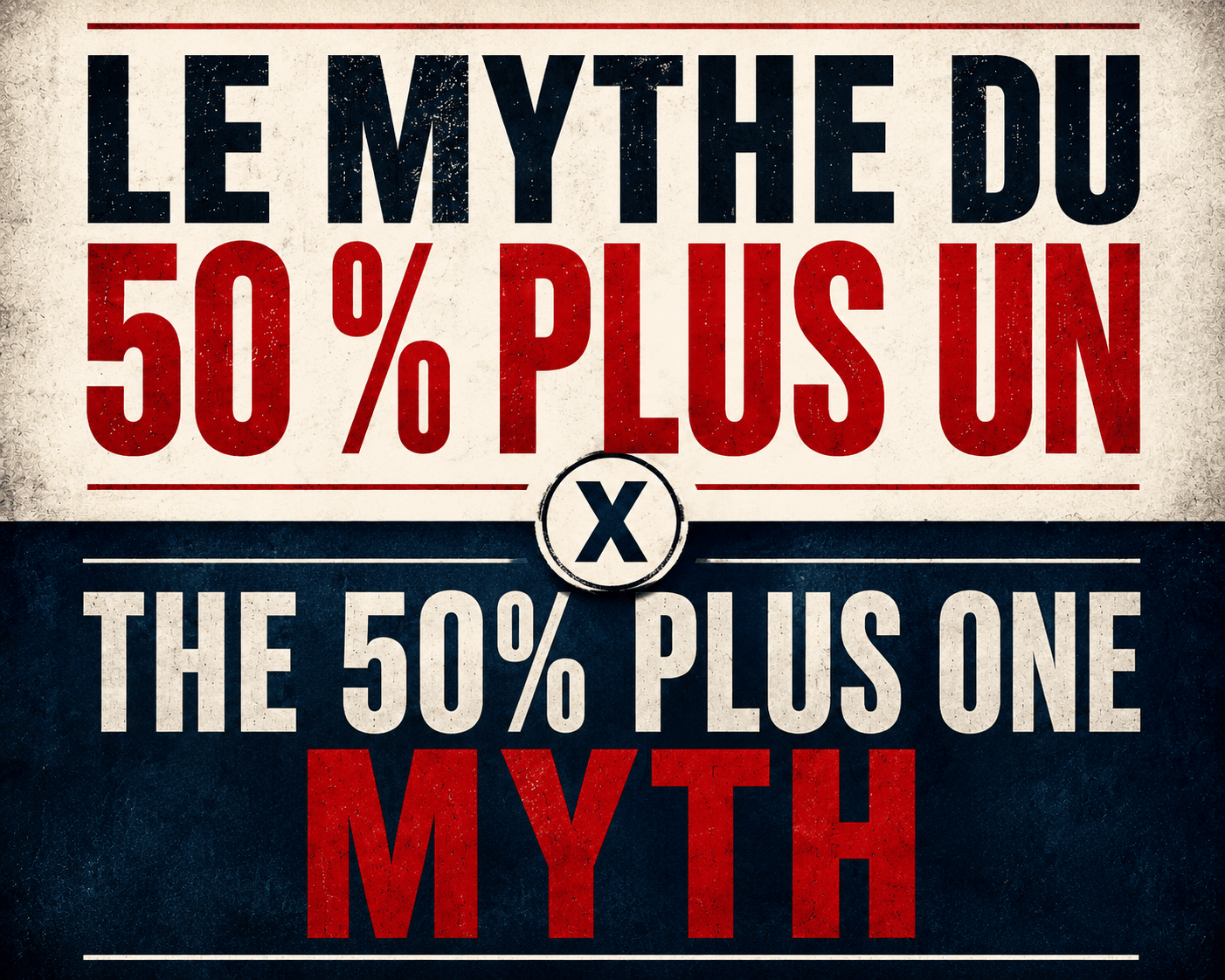
We borrowed a rule for electing governments and decided it was enough to create a country. It isn’t.
I have spent much of my working life in 116 countries, as well as Antarctica and the Arctic, helping organizations and people through major change. I learned one lesson very early: if I couldn’t get roughly 75% of the people affected behind a fundamental change, I questioned whether we were ready to make it. If the support wasn’t there, my advice was simple: wait. Make the case. Build the support. And if you still couldn’t get it, put the change aside and work within the structure you already had.
Which brings me to Quebec independence. How did we ever convince ourselves that 50% plus one vote is enough to dismantle one country and create another? Fifty percent plus one is a perfectly sensible rule for electing governments because elections are reversible. We choose a government, live with it for a few years and, if we don’t like what it does, throw it out. Independence is fundamentally different. It does not change a government. It changes the country. There is no election four years later that puts Canada back together.
Yet in Quebec, 50% plus one has been repeated for so long that we have begun treating it almost as a law of democracy. It isn’t. Canada’s Supreme Court did not say that one vote beyond 50% automatically creates an independent Quebec. It spoke of a “clear majority” answering a “clear question.” Montenegro was required to reach 55% in its 2006 independence referendum. I am not suggesting that either case gives us the magic number. There isn’t one. I am suggesting something more fundamental: the threshold for creating a country should not automatically be the same as the threshold for electing a government.
And I would go considerably further than 50%. My own experience taught me to look for something approaching 75% before undertaking a fundamental transformation. That was not a mathematical formula. It was a practical one. With three people out of four behind a major change, you have a foundation upon which to make it work. At 50% plus one, you have something very different: two camps of almost identical size, with one imposing an irreversible decision on the other.
Think about the morning after a 50% plus one victory. Almost half of Quebec has just voted against leaving Canada. Those people don’t disappear. They remain our families, neighbors, businesses, institutions and citizens. Some will accept the result. Some won’t. Some will organize against what follows, politically and legally. And today they have something populations did not have through most of history: the Internet, operating every hour of every day, allowing millions of people to organize, mobilize, raise money and sustain opposition almost instantly.
I have seen too much of the world to assume that nearly half a population will quietly accept an irreversible transformation simply because the other half defeated them by one vote. That isn’t a prediction of chaos. It is a refusal to pretend that arithmetic eliminates human behavior. And this division would arrive at exactly the wrong moment, when a newly independent Quebec would immediately face difficult negotiations with the Canada it had just left and the enormous economic and geopolitical power of the United States to the south. Quebec would need unity, legitimacy and bargaining strength. A one-vote majority gives you a winner. It does not give you a country ready to face what comes next.
So, I have a proposition that has nothing to do with whether one supports or opposes Quebec independence. Before another referendum is held, Quebecers should agree on a threshold for independence substantially higher than 50% plus one. What should it be? 60%? Two-thirds? 75%? That is precisely the discussion we should have, and we should have it before the referendum campaign begins and before anyone knows which side the threshold will favor.
Federalists should not be allowed to raise the threshold because they fear losing. Sovereignist should not be allowed to keep it at the smallest possible majority because that makes winning easier. Decide the rule first. Then make the case to Quebecers. If sovereignist can persuade a substantial majority that Quebec should become an independent country, they will have achieved something much more important than winning a referendum: they will have created the foundation upon which a country can actually be built.
And if they cannot, wait. Make the case better. Build broader support. If that support eventually comes, hold the referendum. If it doesn’t, put independence aside and work within the structures we already have. I applied that principle to major transformations throughout my working life. I cannot imagine applying a lower standard to the creation of a country.
Fifty percent plus one can elect a government. It should never be enough to dismantle one country and create another.
AJH