
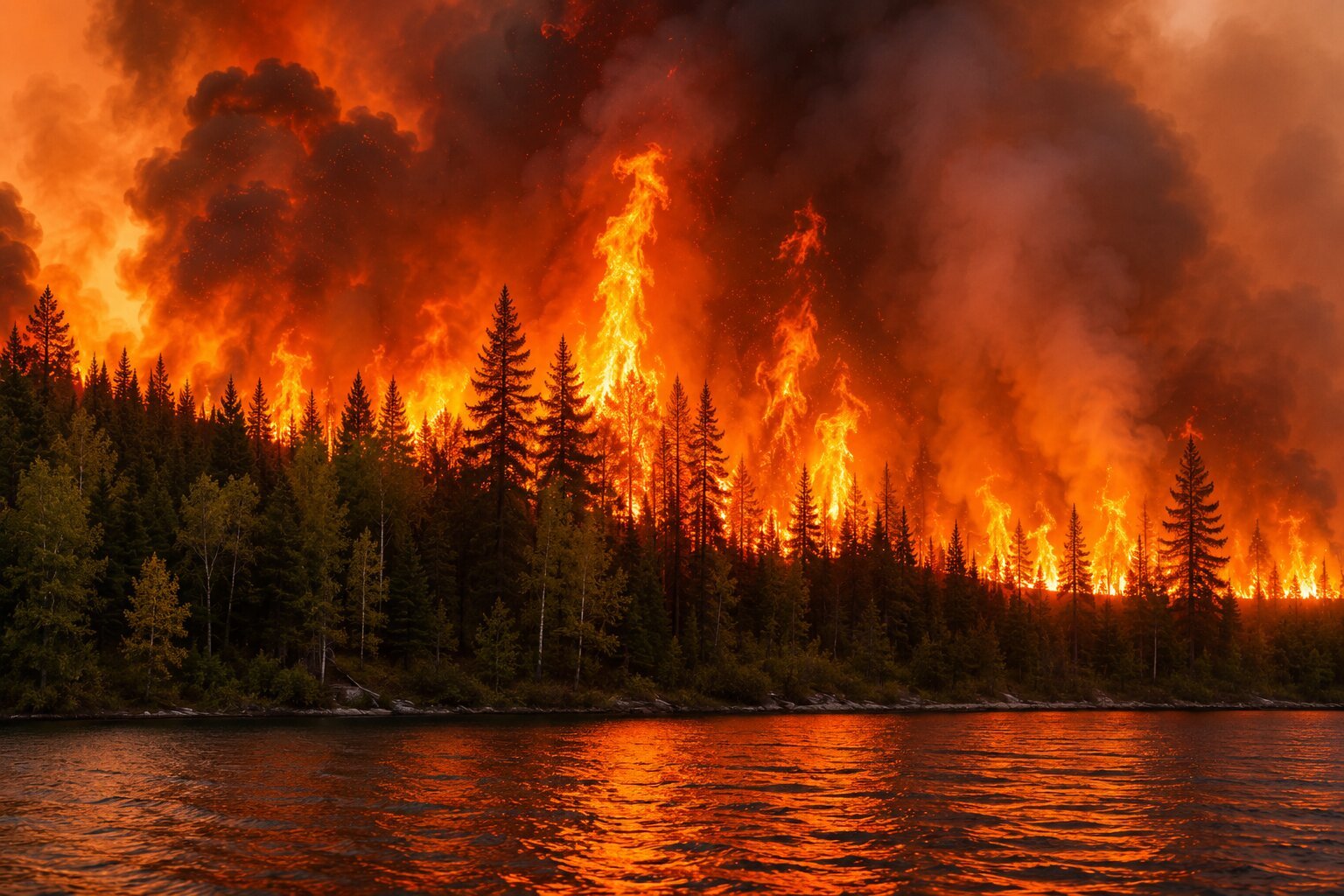
Every summer, we hear the same reassuring message: protecting lives is our highest priority, and we are doing everything we can to fight forest fires. But what if that way of thinking begins too late?
This article argues that Canada is preparing for wildfires the way it prepared for yesterday’s climate instead of tomorrow’s. Once communities are evacuating, the first battle has already been lost. The real challenge is not simply responding to disasters but anticipating them years in advance.
Perhaps it is time to stop thinking of wildfires as seasonal emergencies and start treating them as a permanent national security challenge. If that idea makes you uncomfortable, keep reading.
When our American neighbors complained about “our smoke,” my first instinct was to dismiss the criticism for what it was: another chapter in the tariff dispute. Complaining about smoke crossing a border while imposing tariffs on your closest ally seemed ridiculous. End of story.
Then, later that same day, I listened to a university specialist in forest management explain that Canada is already doing everything it reasonably can. After all, he reminded us, we are dealing with nature.
The interviewer wasn’t satisfied. “There must be something more we can do,” she asked.
The answer that followed had a familiar sound. Calm. Reassuring. Comforting. The kind of answer that tells everyone the system is fundamentally working and that, if we are simply careful enough, things will be fine. Yes, lightning starts many fires. Yes, we should all be vigilant. Yes, prevention matters.
I have spent much of my professional life listening to people who excel at defending the status quo. They rarely raise their voices. They rarely sound unreasonable. Their greatest talent is making inaction sound responsible.
Let’s be honest.
Whether or not we can still slow climate change, we must now learn to adapt to its consequences with far greater urgency. We know more intense fire seasons are coming, yet we continue preparing for them as though they were exceptional events instead of our new reality.
Then, when another disastrous season arrives, we proudly announce that we are “doing the best we can.”
I have dismissed people from organizations for displaying less imagination than that. Had this professor been working for me, I would have had a very difficult conversation with him. Not because he lacked knowledge, but because he appeared to lack urgency.
Canada is the country that invented the world’s finest scooping water bomber. Yet today, the entire country operates only about sixty-four Canadair-type water bombers spread across six provinces. That fleet was built for a climate that no longer exists
If climate change is now our permanent reality, then adaptation must become our permanent strategy.
We should stop thinking of wildfires as isolated natural disasters and start treating them as a recurring national emergency.
Every summer, thousands of Canadians are evacuated. Entire communities disappear behind smoke. Highways close. Businesses shut down. Families lose their homes. Millions of people, including our neighbors to the south, breathe the consequences.
This is no longer simply forestry. It is national resilience.
Earlier today, Ontario Premier Doug Ford responded to American criticism by saying that the number one priority is protecting people’s lives. Of course it is. But protecting lives begins long before the first evacuation order. It begins by anticipating disasters instead of simply responding to them.
Our institutions have become remarkably good at managing emergencies. They remain remarkably poor at preparing for the next one. That is the difference between reacting to a crisis and preventing it from becoming a catastrophe.
Imagine if Canada approached wildfires the way it prepares for national defence. We would not wait until the invasion to discover we lacked aircraft.
We would build the fleet now. We would train more pilots. We would invest in satellites, drones, artificial intelligence, rapid detection systems, and permanent federal coordination capable of deploying resources anywhere in Canada within hours. We would order every additional firefighting aircraft our manufacturers can produce and if they cannot build them fast enough, we should help them expand until they can. Wildfires are no longer seasonal inconveniences. They are recurring national threats.
Nature does not negotiate. It does not compromise. It does not care about budgets, jurisdictions, or election cycles. Every year it asks us the same question: “Have you adapted yet?” Every year we answer with another press conference explaining that we are doing everything we can.
Perhaps we should stop calling them forest fires. Perhaps we should call them forest wars. Wars demand preparation. Wars demand resources. Wars demand leadership.
And above all, they demand that we stop fighting tomorrow’s enemy with yesterday’s strategy.
AJH